GDPR Data Destruction for Schools | UK Guide to Secure Disposal
Schools hold large amounts of personal and confidential information, from pupil records and safeguarding files to staff documents, medical information, exam papers and data stored on computers. When that information is no longer required, simply putting documents in general waste or passing an old computer to a recycler may not be enough.
GDPR data destruction for schools involves identifying information that has reached the end of its retention period and disposing of it securely so that personal information cannot be read or reconstructed. For UK schools, secure disposal should form part of a documented retention and information-management process.
The Department for Education (DfE) states that schools should only retain data for as long as needed and should dispose of information safely when it is no longer required. It also recommends secure destruction methods for paper records and storage media.
For schools managing old computers, hard drives and other IT equipment, XRecycling provides data shredding and IT recycling services designed to help organisations securely manage unwanted equipment and sensitive data. Its services include hard-drive shredding, SSD shredding, data wiping, mobile-device destruction and certificates of destruction.
What Is GDPR Data Destruction for Schools?
GDPR data destruction for schools means securely disposing of personal data when the school no longer has a justified need to retain it.
The process can involve both physical and electronic information. Paper records may require secure document shredding, while information stored on hard drives, SSDs, laptops, servers, phones and other storage devices may require secure data erasure or physical destruction.
The important point is that deleting information from a filing cabinet or computer is not the same as simply throwing the item away. The destruction method should be appropriate to the type and sensitivity of information involved.
The DfE advises schools that records containing personal information should be made unreadable or otherwise impossible to reconstruct when they reach the end of their retention period.
Why Do Schools Need Secure Data Destruction?
Schools manage information about children, families, employees and other individuals. If unwanted records are not securely destroyed, confidential information could remain accessible to people who have no legitimate reason to see it.
Secure data destruction schools processes can help reduce risks associated with:
- Unauthorised access to pupil information
- Exposure of staff and HR records
- Loss of safeguarding information
- Improper disposal of confidential documents
- Data remaining on redundant IT equipment
- Uncontrolled storage of records beyond their required retention period
- Inadequate evidence of disposal
Secure disposal is also part of good records management. The ICO’s storage limitation principle says organisations should not keep personal data for longer than they need it and should be able to justify how long information is retained.
How Does UK GDPR Apply to School Data Disposal?
UK GDPR does not provide one universal destruction date for every type of school record. Instead, schools need to determine appropriate retention periods based on the purpose of processing, legal obligations and other relevant requirements.
The DfE recommends that schools create a data retention policy explaining how long information should be kept and what happens when the retention period ends. It also recommends regular audits of personal data.
The Storage Limitation Principle
The storage limitation principle means personal data should not be kept indefinitely simply because it might be useful one day.
Schools should consider why they hold information, whether there is a legal requirement to retain it and whether it is still needed. Where information is no longer necessary, the school should follow its approved disposal procedure.
The ICO notes that UK GDPR does not establish one fixed retention period for different types of personal data. Retention depends on the purposes for which the organisation holds the information.
UK GDPR and the Data Protection Act 2018
Schools need to consider both UK GDPR and the Data Protection Act 2018 when managing personal information.
However, GDPR compliance is not simply about destroying information as quickly as possible. A school should first determine whether the record still needs to be retained. Some records have specific retention requirements, while others may need to be kept because of legal, operational or other legitimate requirements.
When Can a School Destroy Personal Data?
A school can generally consider destruction when:
- The applicable retention period has ended.
- There is no continuing legal or operational requirement to retain the information.
- The school has checked whether the information needs to be transferred or retained elsewhere.
- The destruction has been authorised according to the school’s procedure.
- A secure destruction method has been selected.
The DfE specifically recommends documenting decisions about whether information should be kept, destroyed, converted to another format or retained for other purposes.
Which School Records Need Secure Destruction?
School record destruction can apply to many categories of information, including:
Pupil and Student Records
Schools may hold information covering admissions, attendance, attainment, behaviour, personal identifiers, trips, medical information and other pupil-related activities.
Retention requirements can vary significantly by record type. Schools should therefore follow their applicable retention schedule rather than applying one destruction date to every pupil record.
Safeguarding and Child Protection Records
Safeguarding and child protection information requires particular care because of its sensitivity.
The DfE retention guidance contains specific requirements for child protection files, including different treatment for records relating to child sexual abuse. Schools should follow the applicable statutory and safeguarding guidance before destroying these records.
SEND and Medical Information
SEND and medical records can contain highly sensitive personal information. Schools should ensure that information is retained only as required and securely destroyed when its applicable retention period ends.
Staff, HR and Payroll Records
Staff information can include personnel files, payroll records, recruitment information, DBS documentation and other employment records.
These records should also be included in the school’s retention and destruction process. The DfE provides specific examples of retention periods for different staff records.
Exam Papers and Confidential Administrative Documents
Schools also generate everyday confidential material, including administrative paperwork, financial documents, correspondence and records containing personal information.
These should not simply become ordinary waste when they are no longer needed.
How Should Schools Destroy Confidential Paper Records?
A secure document destruction schools procedure should prevent confidential information from being reconstructed after disposal.
For paper records, this commonly means using an appropriate cross-cut shredder or a professional confidential shredding service.
The DfE advises schools not to put records containing personal information into regular waste or skips. It recommends cross-cut shredding or using an external company for appropriate destruction.
Secure Shredding vs Ordinary Recycling
Recycling is valuable, but confidential paperwork should be securely destroyed before it enters the normal recycling stream.
Confidential waste schools procedures should separate sensitive documents from ordinary recyclable paper and ensure they are securely destroyed.
On-Site vs Off-Site Shredding
Schools may consider either on-site or off-site destruction depending on their requirements, the type and volume of material, and the provider’s controls.
Before choosing a provider, schools should understand how confidential material is collected, transported, destroyed and documented.
How Should Schools Destroy Hard Drives and Electronic Data?
Modern schools rely heavily on electronic systems, meaning electronic data destruction schools processes are just as important as paper shredding.
Old laptops, desktops, servers, hard drives, SSDs, USB drives and other devices may contain personal information even when a user believes the files have been deleted.
Secure Data Erasure and Sanitisation
Data wiping can be appropriate in situations where equipment is being reused and the information needs to be securely removed.
The appropriate method depends on the storage technology, the intended use of the equipment and the sensitivity of the information.
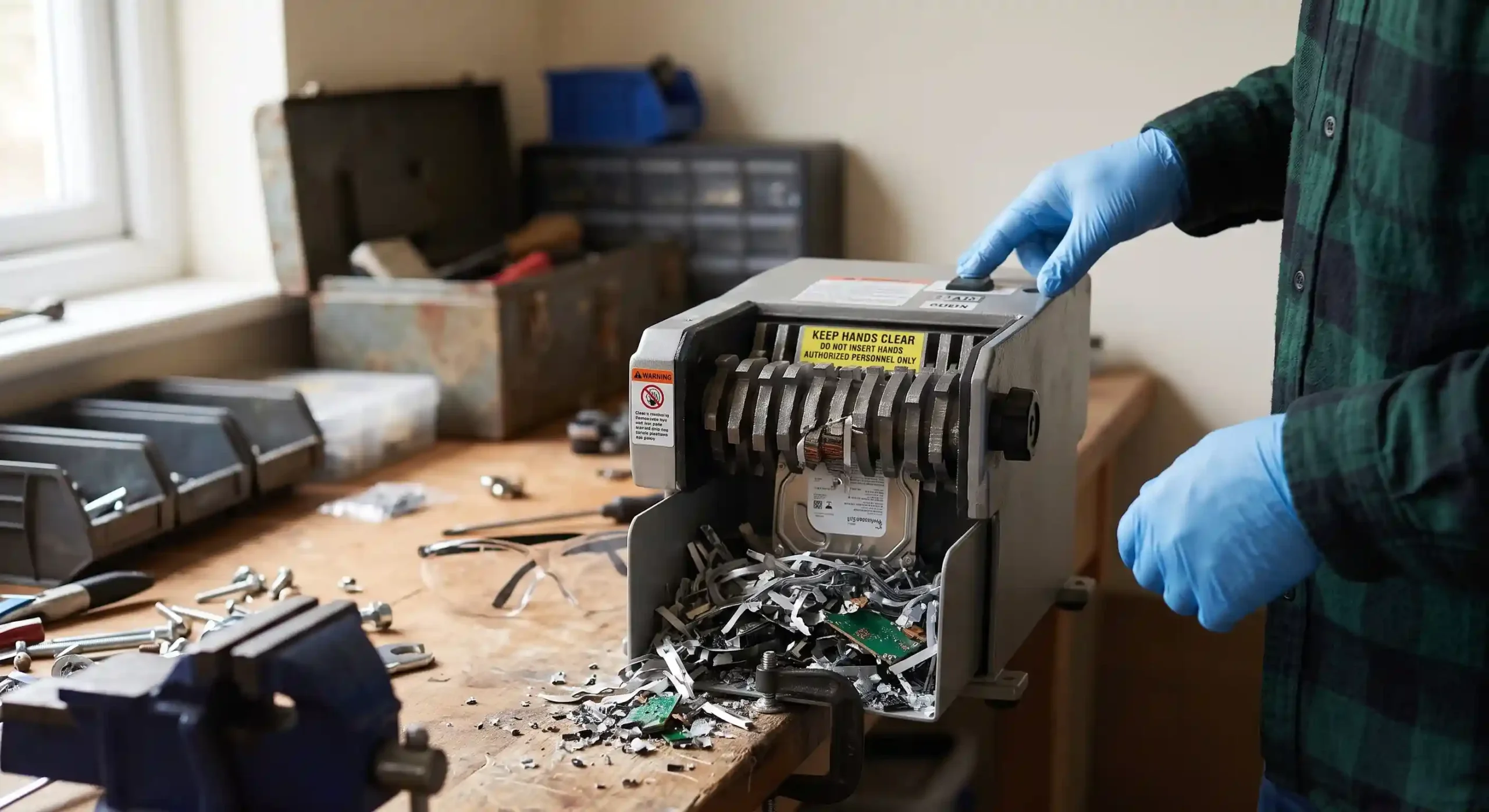
School Hard Drive Destruction
Where a storage device is no longer going to be reused, physical destruction may be considered.
XRecycling provides school hard drive destruction capabilities through its data shredding services, including hard-drive and SSD shredding.
Old Computers, Laptops and Other Devices
Schools may have large quantities of outdated computers, laptops, tablets, mobile devices and networking equipment.
Secure IT disposal schools processes should deal with both the equipment and the information stored on it. XRecycling’s current IT recycling services cover computers, laptops, servers, mobile devices and networking equipment.
USB Drives, Memory Cards and Other Storage Media
Small storage devices can easily be overlooked during an equipment refresh.
Schools should include USB drives, removable media, backup media and other storage devices in their data destruction assessment rather than assuming that only computers contain sensitive information.
What Is Secure IT Disposal for Schools?
Secure IT disposal schools should combine responsible equipment recycling with appropriate data destruction.
The goal is not simply to remove an unwanted computer from the classroom. The school should also consider what information remains on the device and how that information will be securely removed or destroyed.
Data Destruction Before Recycling or Reuse
Before equipment is recycled or reused, schools should establish what data is stored on it and select an appropriate sanitisation or destruction method.
XRecycling combines IT recycling with data destruction services, including data wiping and physical destruction options for storage devices.
Choosing the Right Destruction Method
The right method depends on factors such as:
- Type of storage media
- Sensitivity of the information
- Whether the equipment will be reused
- Whether physical destruction is required
- School retention and disposal procedures
- Evidence required after destruction
How to Create a School Data Destruction Procedure
A practical school data destruction procedure can follow six basic stages.
Step 1: Maintain a Data Retention Schedule
Create a schedule showing what types of information the school holds, why it is retained, how long it should be kept and what happens when the retention period ends.
The DfE specifically recommends data retention schedules for schools.
Step 2: Identify Records Due for Destruction
Review paper files, databases, online systems, photographs, videos and physical storage media.
The DfE recommends auditing personal data at least annually to determine what should be kept, destroyed or otherwise managed.
Step 3: Authorise the Destruction
Destruction should follow the school’s documented process, including any required approval.
Step 4: Secure Records Before Disposal
Keep records awaiting destruction in a controlled location so unauthorised people cannot access them.
Step 5: Destroy Paper and Electronic Data Securely
Use suitable methods for each medium, such as confidential shredding, secure data wiping or physical destruction.
Step 6: Record What Was Destroyed
Maintain an appropriate destruction record showing what was destroyed, when it was destroyed and who authorised it.
The DfE guidance specifically recommends documenting destruction and retaining evidence of what was destroyed and who authorised it.
What Is a Certificate of Data Destruction?
A certificate of data destruction provides documented evidence that specified information or storage media has been destroyed.
Depending on the provider and service, documentation may identify the destruction date, equipment or material involved and other relevant details.
For schools, this can help create an auditable trail for their information-management processes.
XRecycling offers a certificate of destruction as part of its data shredding services.
What Information Should a Destruction Certificate Include?
Schools should check what documentation a provider supplies and whether it gives sufficient information to identify the destroyed material or equipment.
Why Keep Evidence of Destruction?
A documented trail can help schools demonstrate that their disposal process is controlled rather than informal.
It can also help administrators track equipment and records through their lifecycle.
Should Schools Use a Professional Data Destruction Company?
Professional data shredding services for schools can be useful where a school has large volumes of confidential paperwork or multiple devices requiring secure destruction.
When evaluating providers, schools should look beyond price and ask how data is protected throughout the process.
What Should Schools Check Before Choosing a Provider?
Consider:
- Destruction methods offered
- Paper and electronic data capabilities
- Collection arrangements
- Security procedures
- Chain-of-custody processes
- Destruction documentation
- Certificate of destruction availability
- Recycling and environmental practices
- Experience handling confidential information
Questions to Ask a Data Destruction Provider
Before engaging a provider, ask:
- How will our confidential material be transported?
- How will storage devices be destroyed or wiped?
- Can you provide evidence of destruction?
- Do you issue a certificate of destruction?
- How do you track equipment?
- What happens to equipment after data destruction?
- Can you handle both paper and electronic media?
Contracts, Collection and Chain of Custody
If a school uses an external provider, it should understand the provider’s role, responsibilities and data-handling arrangements.
The DfE states that external companies used to destroy records should be able to demonstrate destruction and provide a certificate of destruction, with appropriately trained staff handling confidential documents.
Common GDPR Data Destruction Mistakes Schools Should Avoid
Keeping Records Longer Than Necessary
Keeping information indefinitely creates unnecessary data-management and security risks. Schools should review retention periods regularly.
Putting Confidential Documents in General Recycling
Confidential paperwork should not simply be placed in ordinary waste or recycling. Schools should use an appropriate secure destruction process.
Forgetting Old Hard Drives and Devices
Replacing computers without addressing the information stored on old devices can leave sensitive data exposed.
Destroying Records Without Documentation
A school should not rely solely on the fact that a document has disappeared. Its process should provide appropriate evidence of what was authorised and destroyed.
School GDPR Data Destruction Checklist
Before destroying school information, ask:
- Is the retention period finished?
- Is there any legal or operational reason to retain the information?
- Has the destruction been authorised?
- Is the information paper-based or electronic?
- Has the appropriate destruction method been selected?
- Are confidential records securely stored before destruction?
- Are old hard drives and other storage media included?
- Has the destruction been documented?
- Is a certificate of destruction required?
- Has the equipment been handled responsibly after data destruction?
Frequently Asked Questions About GDPR Data Destruction for Schools
Does GDPR Require Schools to Destroy Old Records?
UK GDPR requires organisations to consider how long personal data is retained. The storage limitation principle means personal data should not be kept longer than necessary. Schools should establish appropriate retention periods and securely dispose of information when it is no longer needed.
How Long Should Schools Keep Personal Data?
There is no single retention period for every type of school data. Retention depends on the type of record, legal requirements and the reason the school needs the information. The DfE provides specific retention guidance for many school records.
How Should Schools Dispose of Confidential Waste?
Schools should use secure destruction methods appropriate to the information. For paper records, this may involve cross-cut shredding or a suitable professional shredding provider rather than ordinary waste disposal.
Can Schools Recycle Confidential Documents?
Confidential documents should be securely destroyed before being treated as ordinary recyclable material. The DfE advises against disposing of records containing personal information through regular waste or skips.
How Should Schools Destroy Old Hard Drives?
Schools should assess whether data should be securely wiped, the device physically destroyed or another appropriate method used. The method should reflect the storage technology, intended equipment lifecycle and sensitivity of the information.
Do Schools Need a Data Destruction Policy?
Schools should have documented procedures covering retention and the disposal of personal data. DfE guidance recommends that a data retention policy includes procedures for destroying personal data at the end of the retention period.
What Is a Certificate of Destruction?
A certificate of destruction is documentation provided by a destruction service to evidence that specified material or equipment has been destroyed. Schools should check that the certificate contains enough information for their own records.
Can Schools Use a Shredding Company for GDPR?
Yes. Schools can use an external provider for secure destruction, but they should assess the provider’s procedures, security arrangements and evidence of destruction. DfE guidance specifically discusses the use of external companies for destroying records.
Conclusion: Building a Secure School Data Destruction Process
Effective GDPR data destruction for schools is about more than putting old paperwork through a shredder or sending unwanted computers for recycling. Schools need a structured process that connects data retention, secure destruction, documentation and responsible IT disposal.
Start by identifying what information the school holds and determining how long each category needs to be retained. When information reaches the end of its applicable retention period, use a destruction method appropriate to the medium and sensitivity of the data.
For paper, this may mean secure document shredding. For computers and storage devices, schools may need secure data wiping, hard drive destruction or other electronic data destruction methods.
XRecycling provides data shredding and IT recycling services for organisations across the UK, including hard-drive and SSD shredding, data wiping, confidential paper shredding and certificates of destruction. Its website also identifies education as one of the sectors it serves.
For schools reviewing their requirements, a well-documented process can help bring together data protection, information governance and responsible IT recycling in one practical workflow.